Chatbot vs Live Chat for Websites
22 October 2026

Every website owner faces the same challenge: how do you provide great, timely support to visitors without breaking the bank or burning out your team? With more UK businesses moving online in 2026, the debate around chatbot vs live chat for websites is more relevant than ever. Let’s break down which approach—or combination—will give your customers the best experience while keeping your business running smoothly.
Quick answer: The chatbot vs live chat for websites debate centres on automation versus human touch. Chatbots deliver instant, round-the-clock replies and lower costs, while live chat offers personal, real-time support. In the UK, most businesses benefit from combining both for efficient, responsive customer service.
Key Takeaways
Chatbot vs live chat for websites is a decision between 24/7 automation and real human help.
Chatbots offer cost savings and instant answers, while live chat excels at complex, sensitive queries.
UK businesses are blending both solutions to improve efficiency and customer satisfaction.
Each option has clear pros and cons; your industry and audience influence the best choice.
Effective implementation and compliance with UK regulations are essential for both tools.
What Are Chatbots and Live Chat?
Chatbots: Automated Customer Support
Chatbots are automated programs designed to simulate human conversation on your website, typically through a chat interface. For UK businesses, chatbots have become a popular way to deliver AI customer support for FAQs, bookings, lead capture, and order tracking. Chatbot implementation strategies in 2026 are far more sophisticated than a few years ago, with many platforms offering natural language understanding and easy integration with other business systems.
One of the main benefits of live chat in the form of chatbots is that they take the pressure off your team by handling repetitive, low-value queries. This improves efficiency and allows your team to focus on higher-priority tasks. However, chatbots can struggle with nuanced or unusual questions, which is why many UK website live chat solutions now offer handover features to connect customers with a live agent when needed.
Live Chat: The Human Element
In contrast, live chat puts your visitors in touch with a real person. This can be a dedicated support agent, a sales representative, or even a freelancer working remotely. Live chat is valued for enhancing user experience with live chat, especially for complex or sensitive issues where empathy, judgement, and negotiation are required. In sectors like insurance, financial services, or healthcare, live chat is often essential to meet both customer expectations and regulatory requirements.
Live chat software for UK businesses comes with features like canned responses, file sharing, and CRM integration. While more expensive than chatbots, live chat remains a preferred channel for customers needing reassurance, technical help, or personalised service. According to Which? (2026), 67% of UK consumers say they trust live chat more than automated options when making important purchases or handling complaints.
Chatbot vs Live Chat for Websites: Pros, Cons, and Key Differences
Chatbot Advantages UK Businesses Should Know
Why choose chatbots? Chatbot vs live chat for websites often tips in favour of bots for businesses with high message volumes, limited staff, or out-of-hours traffic. Chatbots never clock off; they deliver real-time customer engagement at any hour, and they can answer multiple queries simultaneously. For growing SMEs, this scalability is a game changer.
There are also major cost savings. Entry-level chatbot platforms in the United Kingdom start at £25–£50/month, with advanced AI chatbots going up to £150–£300/month. Compare this to the cost of hiring and training staff, and it’s easy to see why chatbots are attractive for routine support. Plus, chatbots help with customer service automation, freeing your team for higher-value work.
Drawbacks and Limitations of Chatbots
However, chatbot solutions have downsides. They can frustrate users if the conversation goes off-script, and some visitors feel alienated by impersonal replies. There’s also the issue of compliance: UK businesses must ensure chatbots handle data securely and transparently under ICO rules. For regulated sectors, bots are best used for triage or non-sensitive tasks, with a clear path to a human when needed.
Benefits of Live Chat for UK Businesses
Live chat, on the other hand, remains the gold standard for complex queries, complaints, and high-value sales. Agents can adapt, empathise, and solve problems that would trip up a bot. Many UK businesses report that live chat increases customer satisfaction and conversion rates, particularly when combined with proactive chat invitations triggered by user behaviour.
Yet live chat is resource-intensive: you’ll need to budget for staff (£12–£20/hour in the UK), training, and management. Coverage can be challenging outside business hours unless you outsource or hire a global team. Still, for sectors where trust is paramount, the investment often pays off.
Feature |
Chatbot |
Live Chat |
|---|---|---|
Availability |
24/7, instant |
Office hours or extended (with staffing) |
Cost (UK typical) |
£25–£300/month |
£50–£400/month + staff |
Personalisation |
Basic to moderate (AI-driven) |
High (human) |
Scalability |
Handles unlimited chats |
Limited by agent capacity |
Best For |
FAQs, lead capture, simple tasks |
Sales, support, complaints, nuanced queries |
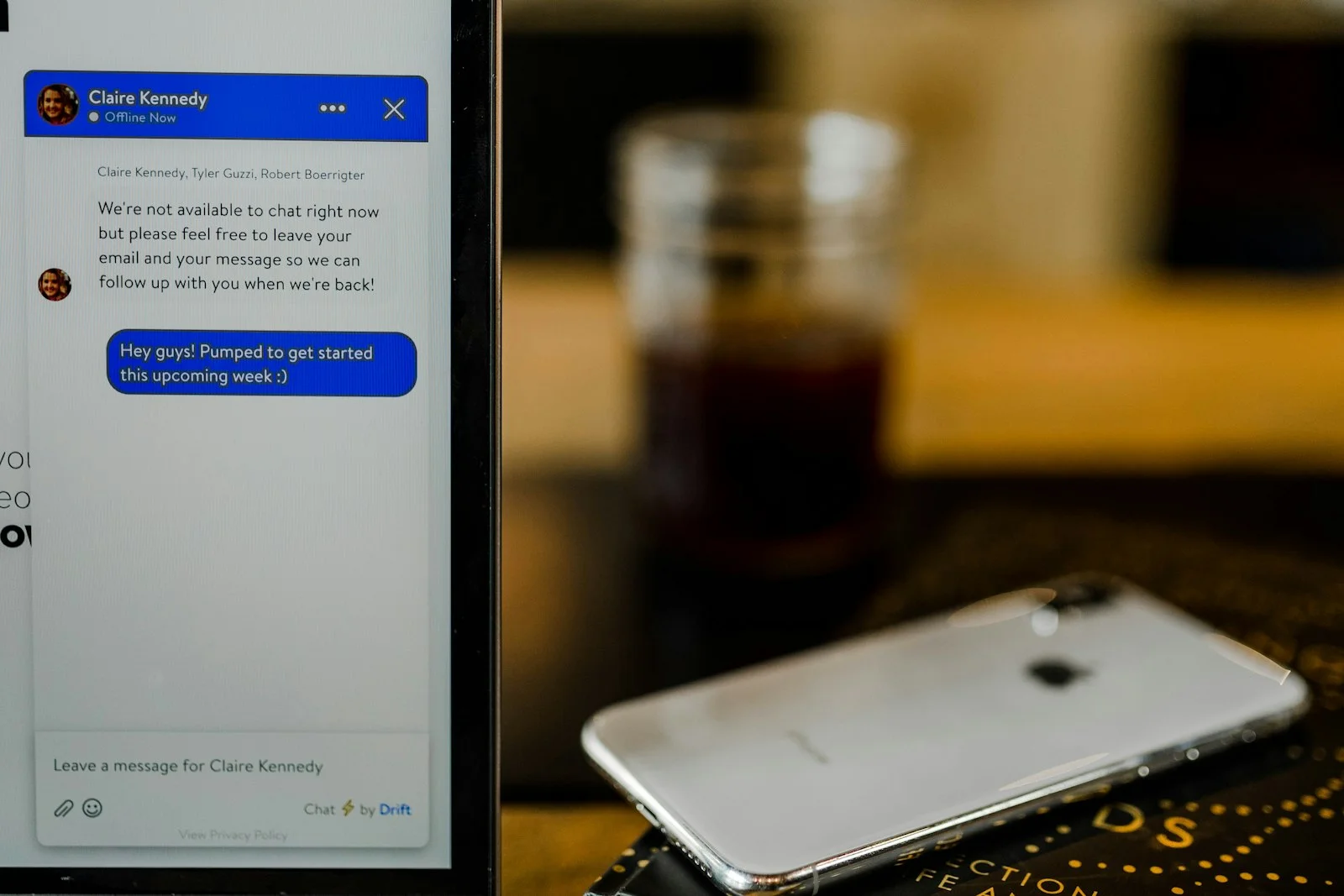
Choosing Between Chatbot vs Live Chat for Websites
Which Is Better: Chatbot or Live Chat?
The question which is better: chatbot or live chat? doesn’t have a universal answer. Instead, it comes down to your volume of enquiries, query complexity, business hours, and customer expectations. For example, a UK-based e-commerce store might use a chatbot for delivery questions and order status, but rely on live chat for returns and complaints. A financial adviser in Manchester might use live chat exclusively due to regulatory demands and client trust needs.
Many UK businesses now combine both, configuring chatbots to handle common queries and escalate others to live agents. This hybrid model maximises chatbot efficiency in customer service without sacrificing the human touch. Recent research by Ofcom (Online Nation 2026) shows that UK consumers increasingly expect instant replies—yet 56% still prefer live chat for serious problems.
How Chatbots Improve Website Interaction
Chatbots streamline the user journey by providing immediate answers and reducing friction during busy periods. When customers don’t have to wait, they’re less likely to abandon your site. This is particularly valuable for local businesses in cities like Birmingham, Leeds, or Edinburgh, where competition is fierce and attention spans are short. If your goal is to increase conversions and reduce bounce rates, a well-configured chatbot is hard to beat.
Enhancing User Experience with Live Chat
Nothing beats a real conversation when it comes to handling unique requests or building long-term relationships. Live chat agents can upsell, cross-sell, and resolve doubts in a way bots simply can’t. Many UK businesses find that offering live chat—especially during office hours—improves customer loyalty, drives repeat purchases, and boosts online reviews. For more on boosting customer retention, see our guide on email marketing for small business.
Costs, Implementation and Compliance in the United Kingdom
Comparing Costs: Chatbot vs Live Chat for Websites
UK pricing in 2026 varies by provider and features. Chatbot solutions are generally more affordable in the long term, with £25–£300 per month covering most SME needs (plus setup fees of £0–£500). Live chat platforms range from £50–£400/month, but you must also account for staff salaries and training. Outsourcing live chat to overseas agents can cut costs but may reduce quality and compliance with UK standards.
For small businesses in places like Bristol, Sheffield or Glasgow, cost is often the deciding factor in the chatbot vs live chat for websites debate. However, don’t ignore the value of personal service—especially if your brand reputation is at stake.
Implementation and Best Practices
Successful chatbot implementation strategies start with mapping customer journeys, identifying common questions, and selecting a platform that integrates with your website and back-end systems. Test thoroughly and make it easy for users to escalate to a human if needed. For live chat, focus on agent training and response times—Ofcom (2026) suggests most UK customers expect a reply within 2 minutes.
It’s essential to comply with UK data protection rules (ICO, 2026). Both chatbots and live chat must handle data securely, provide privacy notices, and give users control over their information. Failure to comply can result in fines and reputational damage.
UK Place Names and Local SEO
Whether your business is based in London, Liverpool, or Cardiff, tailoring your chatbot or live chat support to local dialects and time zones can improve engagement. Mentioning your city or region in the chat welcome message can also boost trust and local SEO. For more UK-specific marketing insights, read our digital marketing hub.

Hybrid Solutions: Blending Chatbot and Live Chat for Websites
How Hybrid Systems Work
The most effective approach for many UK businesses in 2026 is a hybrid solution: use chatbots as the first point of contact, then escalate to live chat for complex or sensitive queries. With customer service automation, bots can triage, answer FAQs, and book appointments, while live agents handle escalations. This balance helps you deliver both speed and empathy.
Modern UK website live chat solutions support seamless handover, showing the agent the full chatbot conversation and context. This avoids repetition and frustration, improving the overall customer journey. It’s a model that works equally well for national chains in Newcastle or local boutiques in Brighton.
Real-World Benefits of Combining Both
UK businesses report reduced support costs, higher customer satisfaction scores, and improved first-contact resolution rates with blended systems. Customers appreciate getting instant help, but also knowing a real person is available if needed. For regulated sectors, hybrid models help ensure compliance and customer trust.
Chatbot handles simple order tracking, FAQs, and appointment booking 24/7
Live chat agents resolve escalated complaints, refunds, or technical issues
Full chat history is visible to both customers and agents for transparency
Adapting Your Strategy for 2026
The chatbot vs live chat for websites conversation will continue to evolve as technology and customer expectations change. For now, the best approach for most UK businesses is to assess customer needs, test both options, and be ready to adapt. For additional insights on evolving digital trends, see our guide to how AI search changes SEO in 2026.
Frequently Asked Questions
Can chatbots fully replace live chat on UK websites?
Chatbots can handle routine queries and basic tasks efficiently, but they rarely replace live chat entirely. Most UK businesses benefit from a hybrid approach, using chatbots for volume and live chat for complex issues.
How secure are chatbot and live chat solutions for UK businesses?
Security and data protection are top priorities. UK providers must comply with the ICO and GDPR. Always choose solutions with end-to-end encryption and clear privacy policies to protect customer data.
What are the main pros and cons of chatbots vs live chat?
Chatbots offer cost savings, instant replies, and 24/7 coverage but may frustrate with limited personalisation. Live chat delivers empathy and nuanced support but costs more and is harder to scale. Combining both often gives the best results.
How do I choose the right solution for my UK business?
Assess your website traffic, query complexity, and customer needs. For high volume and simple questions, start with a chatbot. If you handle sensitive or high-value enquiries, add live chat. Review UK-focused guides like those on Prompt Engineering for up-to-date advice.
Are there affordable options for small businesses in the United Kingdom?
Yes. Many UK providers offer entry-level chatbot and live chat packages starting from £25–£50/month. For more detail, see our articles on 2026 digital marketing costs and tools for small businesses.
Choosing between chatbot vs live chat for websites isn’t just a tech question—it’s about delivering the right customer experience for your brand and budget. For impartial, practical guides on digital strategy, customer service automation, and website tools for UK businesses, contact Prompt Engineering or browse our blog. For official UK guidance, see Which? customer service advice.